
Getting Started
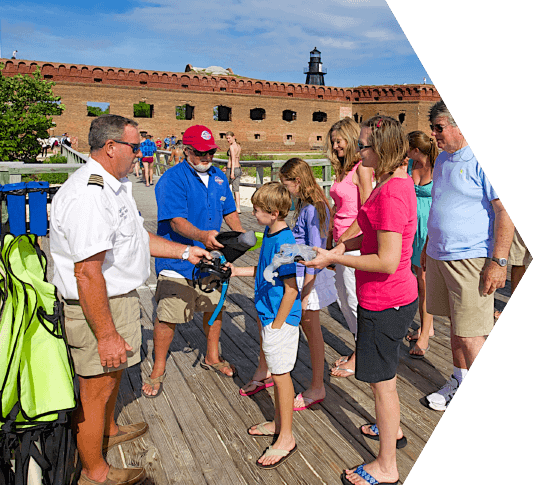
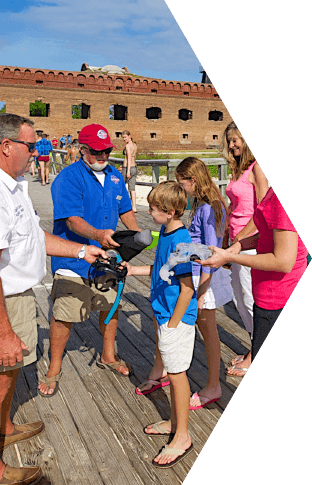
Once you arrive at the Dry Tortugas, there are picnic tables where you can place your personal gear and towels. There are a limited number of picnic tables available outside Fort Jefferson, so you may have to share with other visitors. Please remember that no food, drinks or trash are permitted inside Fort Jefferson, and it is illegal to feed or harass the wildlife!
Restrooms
There are no public restrooms available at the park. Visitors will be required to use the facilities provided onboard the Yankee Freedom II. Composting toilets will be available for visitors to use within the campground and after 2:30 PM. Composting toilets are specially designed toilets that do not require water or chemicals and they can accommodate a small number of users. These toilets are extremely fragile, and throwing trash or other materials into composting toilets is strictly prohibited.
Collecting Is Prohibited
Help protect the Dry Tortugas! Please do not remove seashells, coral, sand, brick, glass, stone, metal or any other natural or historic objects from the premises. If you find an artifact, please do not move or disturb it, and promptly call park staff.
Closed Areas
Some areas of Fort Jefferson are closed to the public. For your safety, please do not enter these clearly marked areas and follow all park regulations. The interior of Fort Jefferson, East Key and Loggerhead Key are only open during daylight hours, and Bush Key is closed from February through mid-September due to bird nesting. Hospital Key and Long Key are closed year round.
Garden Key has fishing restrictions. The following areas on Garden Key are closed to fishing:
• The moat, moat wall, and within 300 feet of moat wall
• Vessels moored at the Garden Key Dock
• Helicopter pad area
• North and South beaches
Do the rangers live at the fort?
Yes! There are about a dozen National Park Service personnel living and working in the Dry Tortugas. The group includes rangers, maintenance workers, and their families—enough to provide for the basic support and protection of the 100–square–mile park.
Employees have their own living quarters, complete with a kitchen, living room, and bathroom. Most live within the casemates of the fort. To help maintain their privacy, the housing area is closed to the public.
Rainwater provides employees with some of their fresh water. Using parts of the historic rainwater catchment system (first used in the 1850s), water is stored in a large cistern in the parade ground. A process known as reverse osmosis can also convert up to 1,000 gallons of saltwater into freshwater daily.
Electricity is provided by diesel generator. The generator runs 24 hours a day, seven days a week, creating enough electricity to power employee residences, offices and public areas.
Job vacancies are filled through competitive hiring. Employees can remain as long as they choose; the typical length of stay is three years.
Park staff normally work ten consecutive days. When not working, the staff may choose to stay at the fort during their days off to do the same things that you do on your days off: sleep late, clean house, write letters, do laundry. About once a month a trip to town becomes necessary for running errands, shopping or just to see the latest movie!
Regulations
National Park Service and The U.S. Department of Interior. |